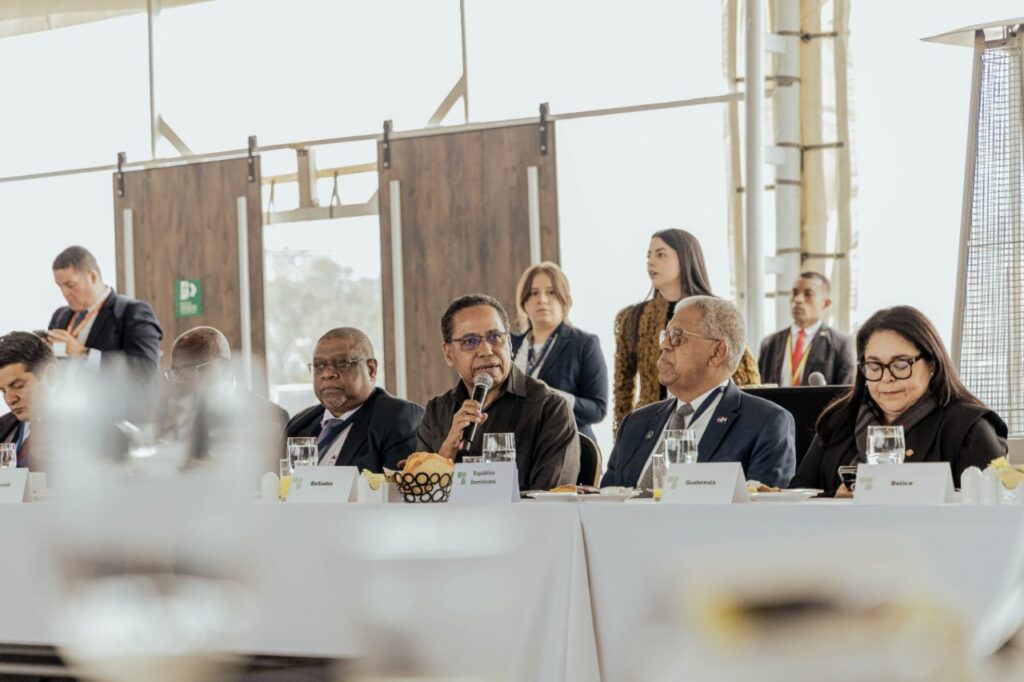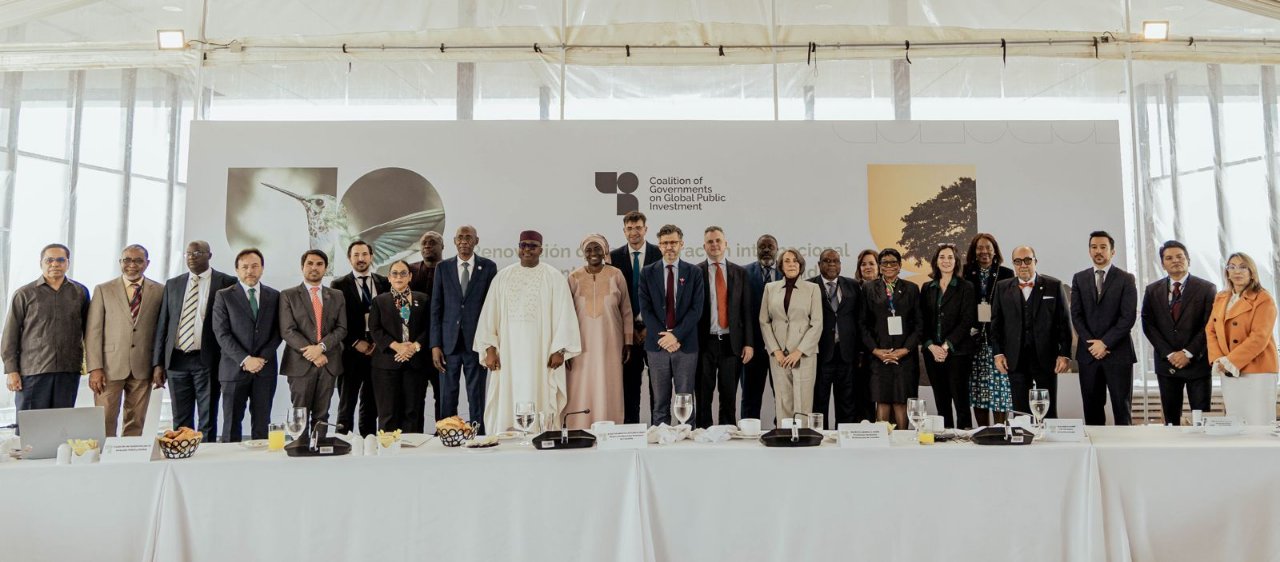
The Coalition of Governments for Global Public Investment convened today to advance its efforts to transform the way the world finances common global challenges. Meeting in Bogotá, on the sidelines of the CELAC-Africa High Level Forum, leaders from across Africa, Latin America and the Caribbean emphasised that the moment marks a turning point in international cooperation.
The coalition, co-chaired by the governments of Colombia and Senegal, positions the Global Public Investment (GPI) framework based on the principle that all contribute, all benefit, all decide.
Colombia’s Foreign Minister, Rosa Yolanda Villavicencio, highlighted the urgency of change: “We are at a moment of inflexion in the international system… we must rethink how cooperation works; not by restoring old models, but by building new ones that reflect today’s realities.”
Aminata Touré, Former Senegalese Prime Minister and Club de Madrid member added: “The current arrangements for cooperation have broken down, and we must now build new systems fit for this era.”
From Ghana, Foreign Minister Samuel Okudzeto Ablakwa stressed the importance of equality: “We are not looking for charity. We are looking for an equal partnership that reflects dignity, agency and shared responsibility.”
Throughout the meeting, ministers and representatives underscored a clear shift in mindset:
- From charity to partnership
- From donors and recipients to shared responsibility
- From isolated action to collective investment
Panama’s Foreign Minister, Javier Martinez-Acha, reinforced the role of the Global South: “Africa and Latin America are not regions of need; we are regions of solutions.”
Senegal’s Foreign Minister, Cheikh Niang, concluded: “The challenges we face are interconnected and beyond the capacity of any one country, requiring collective action and shared responsibility.”
The coalition aims to connect leadership across regions, mobilise resources, and translate shared ideas into practical outcomes. While still in its early stages, participants agreed that the initiative signals a significant shift in how nations will work together to address global challenges.