Over 30 countries come together to redesign finance for international cooperation

As foreign aid tumbles, a group of pioneer governments are shaping a new approach fit for the 21st century


9 June 2026 – With traditional finance falling, a rapidly growing coalition of governments is crafting a bold new approach to financing shared global challenges, including enabling access to clean energy, tackling disease outbreaks, and responding to emergencies.

Co-convened by the Foreign Ministers of Senegal and Colombia, more than 30 countries have come together in the Coalition of Governments on Global Public Investment, which is working to transform the current global inflection point into a moment of renewal. Global public investment provides a way for all countries to benefit from shared solutions, to which all countries contribute according to their means, and for which all countries decide together as equals.

As the world’s traditional powers prepare to meet at the upcoming G7 Summit in France, the Coalition of Governments on Global Public Investment has a clear message for G7 leaders: “We are not looking for sympathy. What we want is an equal partnership,” said Samuel Okudzeto Ablakwa, Minister of Foreign Affairs of Ghana.

The coalition’s emphasis is on solutions: “Global public investment is the smart, 21st-century answer to how governments can work together to overcome the challenges and crises that affect us all,” said Rosa Yolanda Villavicencio Mapy, Minister of Foreign Affairs of Colombia and co-chair of the coalition. “A significant increase in public financing is essential — and crucially, these resources must be governed under more representative and effective frameworks.”

Growing support from governments

The coalition, which provides a political and technical platform for governments to articulate shared priorities and shape a new global framework, has secured growing support and engagement.

“Global public investment recognises the limitations of the current model and enables us to advance towards more inclusive, effective, and representative international cooperation, placing people at the centre,” said Mireya Agüero, Minister of Foreign Affairs of Honduras.

Launched in July 2025 at the Fourth International Conference on Financing for Development, the coalition is a flagship initiative of the UN’s Sevilla Platform for Action. The coalition held its inaugural planning meeting in September 2025 on the sidelines of the United Nations General Assembly. This year the governments have gathered in Bogota in March, and in Nairobi in May, and will gather again in New York in September. The coalition continues to expand across continents.

“Our challenges are shared; our risks are shared; and increasingly, our solutions must also be shared,” said Martín Clavijo, Director of Uruguay’s Agency for International Cooperation. “Global public investment is as an evolution in how we understand cooperation towards a framework in which all countries contribute according to their capacities, all benefit according to their needs, and all participate as equals in decisions about the use of resources.”

“The future of international cooperation must evolve toward approaches that better reflect shared responsibility and collective interest,” said Limpho Tau, Minister of Foreign Affairs of Lesotho.

Several governments have already begun integrating GPI into their diplomacy, harnessing their networks to foster cooperation regionally and globally. A long-term work programme and governance framework for GPI are being developed, alongside pilot initiatives and regional dialogues to help design mechanisms to put GPI principles into practice.

“Global public investment invites us to move beyond traditional donor-recipient paradigms, towards a more horizontal, inclusive, and partnership-based approach,” said Cheikh Niang, Minister of Foreign Affairs of Senegal and co-chair of the Coalition. “The Coalition of Governments on Global Public Investment recognises that all countries, regardless of their level of development, have both contributions to make and legitimate expectations to express. To solve our national, regional, and global problems, we can’t rely on philanthropy alone, and we can’t just look to the private sector to save us. We need more and better public money to solve our collective challenges.”

“There is an urgent need for a renewed international financial architecture that is more inclusive, more representative and better aligned with contemporary global realities,” said Korir Singoei, Principal Secretary, Department for Foreign Affairs of Kenya.

Following years of research and analysis, global public investment (GPI) has moved from being an idea for discussion to a policy proposition that a growing group of pioneer governments are working to implement: “A great deal of intellectual effort has been made over more than a decade to ensure that an appropriate model for global public investment was brought forward,” said Alva Baptiste, Minister of Foreign Affairs of Saint Lucia. “Now we are mandated to get airborne.”

Powerful partnerships

The governments in the coalition are working closely with civil society and international institutions. The Secretariat serving the coalition is provided jointly by the Global Public Investment Network (GPIN), a civil society network, and Club de Madrid, the world’s largest forum of democratic former presidents and prime ministers.

“The pioneers who are coming together in the Coalition of Governments on Global Public Investment are shaping the future of international cooperation and global public finance, and helping to renew and remake multilateralism,” said María Elena Agüero, Secretary General of Club de Madrid. “The approach they’re developing together will be fairer than approaches inherited from the last century, ensuring all countries have a voice and a stake. It will also be much more effective, helping to improve lives across the world.”

As old systems of international cooperation decline, the coalition insist on the need to go beyond simply cushioning the present disruption. They are clear that past approaches will not and should not return. Instead, they are working to turn breakdown into breakthrough by bringing countries together as equals to remake international finance for an interdependent world.

“The Coalition of Governments on Global Public Investment is seeking to change the rules of international finance and development, to shock-proof our economies, and to dramatically increase financing,” said David Comissiong, Ambassador of Barbados to the Caribbean Community and to the Association of Caribbean States.

“Global public investment is about interconnectedness, mutuality and voice,” said Josephilda Nhlapo-Hlope, Chair of G20 Development Working Group of South Africa. “It addresses the participation gap in international cooperation, and the need for new financing instruments to ensure the provision of public goods.”

“Do we want to be the generation that managed a crisis — or the generation that transformed the course of global cooperation?” said Javier Eduardo Martínez-Acha Vásquez, Minister of Foreign Affairs of Panama. “Global public investment can enable us not only to transform international cooperation but to transform the future of humanity.”

Visit the website of the Coalition of Governments on Global Public Investment at gpigovernments.org

To arrange interviews with the Coalition of Governments on Global Public Investment contact: Ben Phillips, ben@globalpublicinvestment.net, WhatsApp +66613649866; Soni Adriance, soni.adriance@burness.com, WhatsApp +254708340877; Valentín Betrán, vbetran@clubmadrid.org, WhatsApp +34671201674.


Quotations from governments

Cheikh Niang, Minister of Foreign Affairs, Senegal, and co-chair of the coalition:

“Global public investment invites us to move beyond traditional donor-recipient paradigms, towards a more horizontal, inclusive, and partnership-based approach. The Coalition of Governments on Global Public Investment recognises that all countries, regardless of their level of development, have both contributions to make and legitimate expectations to express. In doing so, it is reshaping international cooperation as a shared endeavour grounded in co-responsibility, mutual benefit, and collective stewardship.”

Rosa Yolanda Villavicencio, Minister of Foreign Affairs, Colombia, and co-chair of the coalition:

“We are at an inflection point in the international system. Traditional responses have shown their limits. But these are also times of opportunity. The Coalition of Governments on Global Public Investment recognises the value of collective action. A significant increase in public financing is essential — and crucially, these resources must be governed under more representative and effective frameworks. The moment for global public investment is now.”

David Comissiong, Ambassador to the Caribbean Community and to the Association of Caribbean States, Barbados:

“What the Coalition of Governments on Global Public Investment is seeking to do is very complementary to the Bridgetown Initiative: to change the rules of international finance and development, to shock-proof our economies, and to dramatically increase financing. The coalition is a very powerful institutional structure for helping revamp our international economic and political order.  It is an idea whose time has come.”

Samuel Okudzeto Ablakwa, Minister of Foreign Affairs, Ghana:

“We pledge our full support and commitment to this process. With a fractured global order, the time has come to collaborate and address the challenges that confront us collectively which we cannot solve unilaterally. We are not looking for sympathy. What we want is an equal partnership. The Coalition of Governments on Global Public Investment aligns clearly with the Accra Reset. It represents a new development paradigm — and is long overdue.”

Mireya Agüero, Minister of Foreign Affairs, Honduras:

“Global public investment recognises the limitations of the current model, and enables us to advance towards more inclusive, effective, and representative international cooperation placing people at the centre. It measures success not only in terms of disbursements, but in terms of the true impact generated in reducing poverty, increasing productivity, creating employment opportunities, and building climate resilience.”

Korir Singoei, Principal Secretary, Department for Foreign Affairs, Kenya:

“Development finance can no longer be understood solely through traditional donor-recipient frameworks. The Coalition of Governments on Global Public Investment’s emphasis on shared responsibility, mutual benefit, more inclusive governance and long-term investment resonates strongly with Africa’s aspirations for a more balanced and equitable global system. Many countries, particularly across Africa, continue to face significant constraints in accessing affordable and predictable financing for development and resilience. These realities underscore the urgent need for a renewed international financial architecture that is more inclusive, more representative and better aligned with contemporary global realities.”

 Limpho Tau, Minister of Foreign Affairs, Lesotho:

“The current international financial architecture is not adequately responding to the realities and priorities of developing countries. At the same time, the world faces challenges that are fundamentally global in nature. This means that the future of international cooperation must evolve toward approaches that better reflect shared responsibility and collective interest. The Coalition of Governments on Global Public Investment encourages us to move beyond outdated assumptions and toward a more inclusive and partnership-based framework. It is showing that countries of the Global South have the experience and the political responsibility to help shape the future direction of international cooperation.”

Javier Eduardo Martínez-Acha Vásquez, Minister of Foreign Affairs, Panama:

“The concept of global public investment is not simply a technical innovation — it is, in essence, a political and ethical proposal, based on co-responsibility, mutual interest, and the dignity of all countries as equal actors in defining global priorities. Do we want to be the generation that managed a crisis — or the generation that transformed the course of global cooperation? Global public investment can enable us not only to transform international cooperation but to transform the future of humanity.”

Alva Baptiste, Minister of Foreign Affairs, Saint Lucia:

“There is absolutely no doubt that global public investment is needed at this point in time. A great deal of intellectual effort has been made over more than a decade to ensure that an appropriate model was brought forward. Now we are mandated to get airborne. Long live the Coalition of Governments on Global Public Investment. For the sake of future generations, we have no alternative but to make it work.”

Josephilda Nhlapo-Hlope, Chair of G20 Development Working Group, South Africa:

“Global public investment is about interconnectedness, mutuality and voice. It moves the world beyond charity by enabling collective action to address collective global problems. It addresses the participation gap in international cooperation, and the need for new financing instruments to ensure the provision of public goods. The need for global public investment is a no-brainer.”

Martín Clavijo, Director, Agency for International Cooperation, Uruguay:

“The traditional language of development finance — built largely around the notion of aid flowing in one direction — no longer reflects the realities of an interconnected world. Our challenges are shared; our risks are shared; and increasingly, our solutions must also be shared.  Global public investment is as an evolution in how we understand cooperation towards a framework in which all countries contribute according to their capacities, all benefit according to their needs, and all participate as equals in decisions about the use of resources.”

These countries have also taken part in high-level meetings of the Coalition:

⁠Angola
Antigua and Barbuda
⁠Burundi
Chile
Costa Rica
Dominican Republic
Egypt
El Salvador
Guatemala
⁠Haiti
Jamaica
Malawi
Mexico
Mozambique
Nepal
⁠Nicaragua
Peru
Seychelles
⁠Sierra Leone
Sri Lanka
Tanzania
Trinidad and Tobago
Suriname
⁠Venezuela


Governments meeting in Nairobi chart the course for global public investment

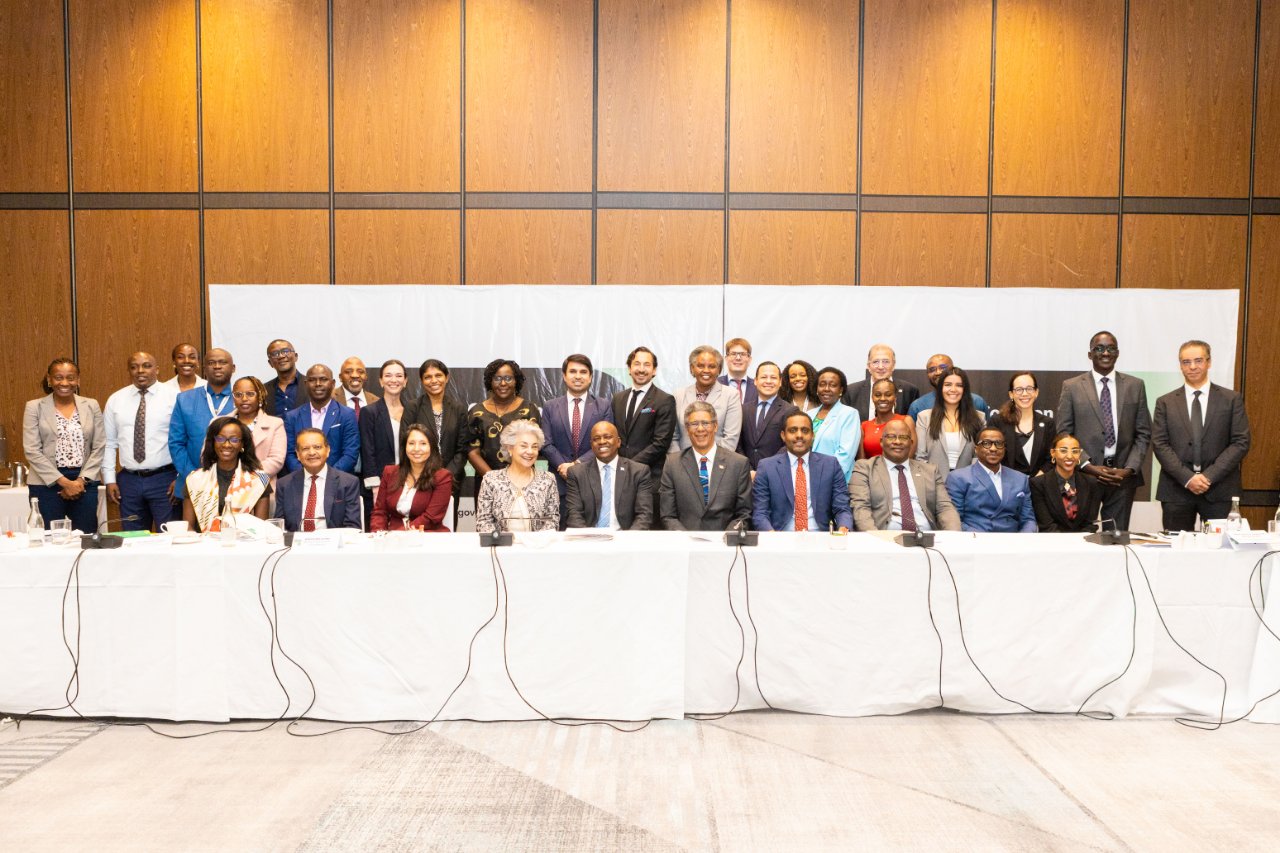
A pioneer group of governments gathered in Nairobi on May 11, on the sidelines of the Africa Forward Summit, to plan how shared global challenges can be resourced in the new era through global public investment.

The meeting of the Coalition of Governments on Global Public Investment was convened by Senegal’s Minister of Foreign Affairs Cheikh Niang.

“Global Public Investment is not simply a financing mechanism; it is a new political logic for international cooperation in the twenty-first century. The Global South must help shape this next phase. Not in opposition to partners in the North, because partnerships remain essential, but in a spirit of greater equality and co-authorship.” said Mr Niang.

Senegal, along with Colombia, is co-chair of the coalition, which brings together countries committed to advancing political dialogue and practical cooperation to renew international cooperation.

Global public investment is a forward-looking approach to international cooperation grounded in co-responsibility and inclusive governance. Separate but additional to the current system of ODA, global public investment will strengthen legitimacy, reduce fragmentation, and support more effective and predictable financing for shared global challenges. Global public investment is an approach from which all countries benefit from shared solutions, to which all contribute according to their means, and in which all decide as equals.

Botswana’s Fifth President, Mokgweesi Masisi, gave a special address to the meeting on behalf of Club de Madrid, the largest forum of democratic former Presidents and Prime Ministers, who are leveraging their individual and collective leadership experience and global reach in support of the work of the coalition.

“For countries across Africa, this Coalition represents a shift from a model of dependency to a model of partnership; not standing outside the system asking for support, but ready to co-invest in our shared future. But for that to happen, we need a system that works differently,” said Mr Masisi.

Today’s meeting of governments builds on the one held on 20 March in Bogotá, and will be followed by further meetings that will take place across 2026, 2027 and 2028. A flagship of the UN’s Sevilla Platform for Action, the coalition provides a platform for governments to articulate shared priorities and to shape emerging global frameworks. Over 25 countries are already involved in the Coalition. Today’s ministerial meeting brought together a further 18 governments from four continents.

“What we are seeing is that governments have moved beyond initial discussions and are now mapping out a shared work programme,” said Simon Reid-Henry, the coalition’s head of secretariat. “Today’s meeting demonstrated that global public investment has gone from being an aspirational idea to one recognised as a practical policy choice – and that is now being readied by governments for implementation.”

“Political momentum for global public investment has accelerated dramatically in 2026,” said María Elena Agüero, Secretary General of Club de Madrid. “The governments involved are not mourning the old but building the new. Global public investment can be realised this decade.”
Bogotá Meeting Marks Turning Point in International Cooperation

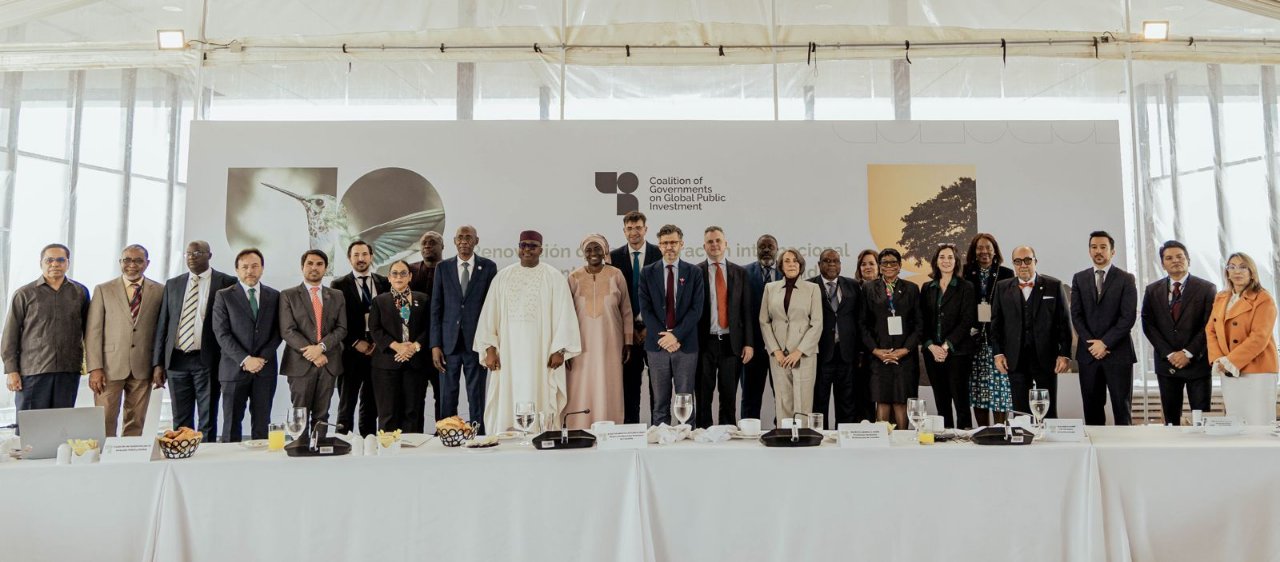
The Coalition of Governments for Global Public Investment convened today to advance its efforts to transform the way the world finances common global challenges. Meeting in Bogotá, on the sidelines of the CELAC-Africa High Level Forum, leaders from across Africa, Latin America and the Caribbean emphasised that the moment marks a turning point in international cooperation.

The coalition, co-chaired by the governments of Colombia and Senegal, positions the Global Public Investment (GPI) framework based on the principle that all contribute, all benefit, all decide.

Colombia’s Foreign Minister, Rosa Yolanda Villavicencio, highlighted the urgency of change: “We are at a moment of inflexion in the international system… we must rethink how cooperation works; not by restoring old models, but by building new ones that reflect today’s realities.”

Aminata Touré, Former Senegalese Prime Minister and Club de Madrid member added: “The current arrangements for cooperation have broken down, and we must now build new systems fit for this era.”

From Ghana, Foreign Minister Samuel Okudzeto Ablakwa stressed the importance of equality: “We are not looking for charity. We are looking for an equal partnership that reflects dignity, agency and shared responsibility.”

Throughout the meeting, ministers and representatives underscored a clear shift in mindset:

  • From charity to partnership
  • From donors and recipients to shared responsibility
  • From isolated action to collective investment

Panama’s Foreign Minister, Javier Martinez-Acha, reinforced the role of the Global South: “Africa and Latin America are not regions of need; we are regions of solutions.”

Senegal’s Foreign Minister, Cheikh Niang, concluded: “The challenges we face are interconnected and beyond the capacity of any one country, requiring collective action and shared responsibility.”

The coalition aims to connect leadership across regions, mobilise resources, and translate shared ideas into practical outcomes. While still in its early stages, participants agreed that the initiative signals a significant shift in how nations will work together to address global challenges.

Meeting of governments in NY (September 2025)

This meeting, on the sidelines of the United Nations General Assembly, marked the beginning of regular convenings by governments and international institutions to explore how to implement Global Public Investment as a new framework for global financing.

The convening was initiated by the Government of Uruguay, the Development Bank of Latin America and the Caribbean (CAF), and Club de Madrid, the world’s largest forum of democratic former Presidents and Prime Ministers.

Over a dozen governments took part, with over a dozen more already interested in connecting with the process going forward. Regular convenings will take place across 2025, 2026, and 2027. The governments will work with civil society and international institutions to pilot and scale a framework for global public investment, through regional dialogues, policy research, and pilot projects. This inclusive approach will ensure that implementation reflects the requirements of international cooperation in the 21st century.

Ambassadors Meeting in Madrid (January 2026)

The Coalition of Governments and International Organisations for GPI is gaining momentum as it builds a platform for the change these governments are leading on. In January 2026, we took the Coalition on the road.

In Madrid we were honoured to present the Coalition at a roundtable of ambassadors from Angola, Mexico, Canada, South Africa, Korea, Belgium, Uruguay, Chile and representatives of the multilateral banks, hosted by Club de Madrid and Secretaría General Iberoamericana (SEGIB), chaired by Secretary General Maria Elena Aguero and opened by President Laura Chinchilla Miranda. Our meeting made clear the energy and excitement about the Coalition as governments look to find new forms of cooperation in a gridlocked multilateral system.